
Construction Rules in Vāstu Śāstra – Sūtikāgṛha, Foundations, Water Structures, and Longevity of Houses
Vāstu Śāstra, the ancient Indian science of architecture, links house construction with cosmic forces. It not only guides physical design but also considers astrology, planetary positions, and auspicious timings to ensure prosperity and longevity. This post explores special rooms, house longevity, and planetary influences in detail.
Construction of the Sūtikāgṛha (Maternity Room)
For kings and wealthy persons, the Sūtikāgṛha (maternity room) should be built under the constellation Punarvasu. It should be located in the south–southeast direction, preferably next to the bathroom within the house. This placement ensures prosperity and well-being.
Auspicious Time for Entering the Sūtikāgṛha and for House Foundation
The foundation or first entry to the Sūtikāgṛha should be performed during the constellation period between Śravaṇa and Abhijit. One should avoid movable lagnas and movable navāṁśas.
If the lagna falls in an upacaya house (3rd, 6th, or 11th) from the owner’s janma-rāśi (birth sign) or janma-lagna (birth ascendant), it is auspicious for beginning construction.
However:
- There should not be any planet in the 8th house from the foundation lagna.
- The 8th house from the janma-lagna or janma-rāśi of the owner should not coincide with the foundation time.
If in the foundation chart, malefics occupy the 3rd, 6th, or 11th houses, and benefics are placed in kendra or trikona, then the construction should be commenced.If malefics are placed in the 8th house from the lagna, it leads to danger to the house owner’s life.
Construction of Water Reservoirs
When the lagna is a human sign (Mithuna, Kanyā, Tulā), excluding Kumbha, and if benefics aspect or join the lagna, then it is auspicious to construct wells, tanks, ponds, or other water structures. Such constructions ensure abundant and faultless water supply.
Combinations for House Longevity
Houses Lasting for 100 Years
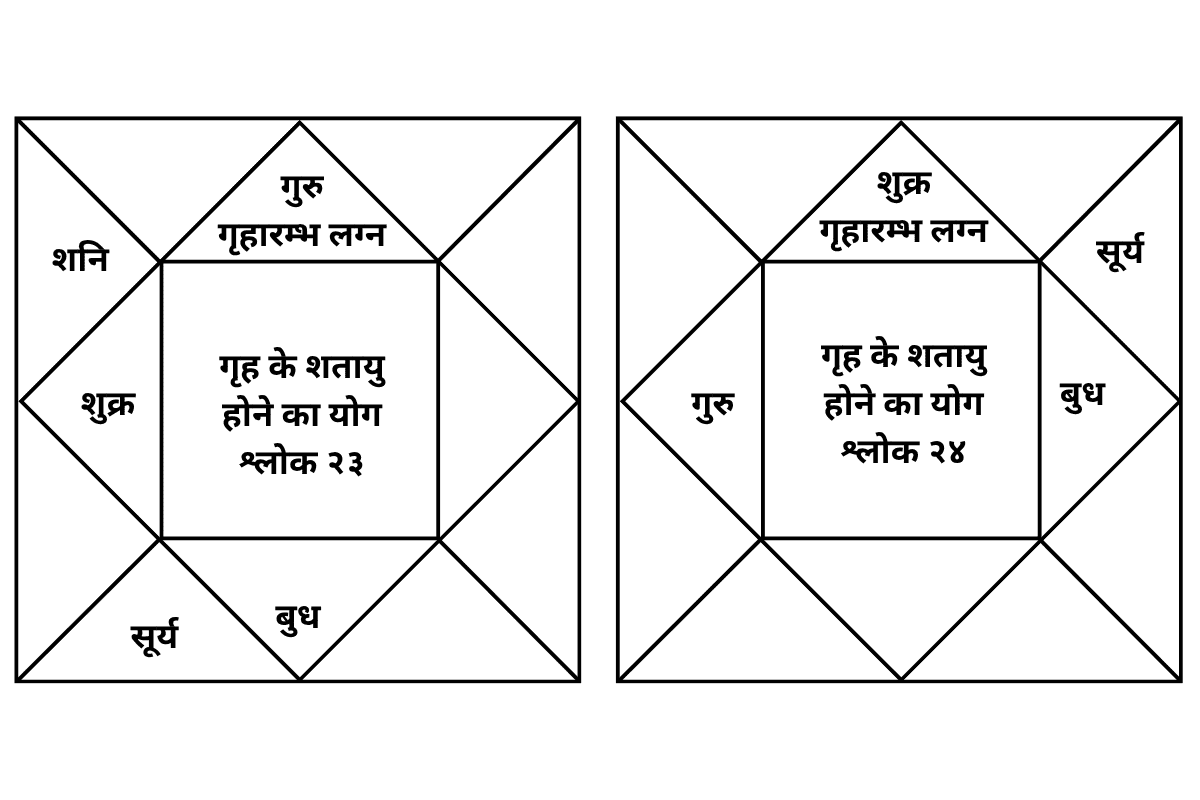
If at foundation time, Jupiter is in lagna, Sun in 6th, Mercury in 7th, Venus in 4th, and Saturn in 3rd, the house lasts for 100 years.
Again, if Venus is in lagna, Mercury in 10th, Sun in 11th, and Jupiter in any kendra, then also the house lasts for 100 years.
Houses Lasting for 80 Years
If Jupiter is in 4th, Moon in 10th, and Mars with Sun in 11th, then the house lasts for 80 years.
Houses Lasting for 200 Years
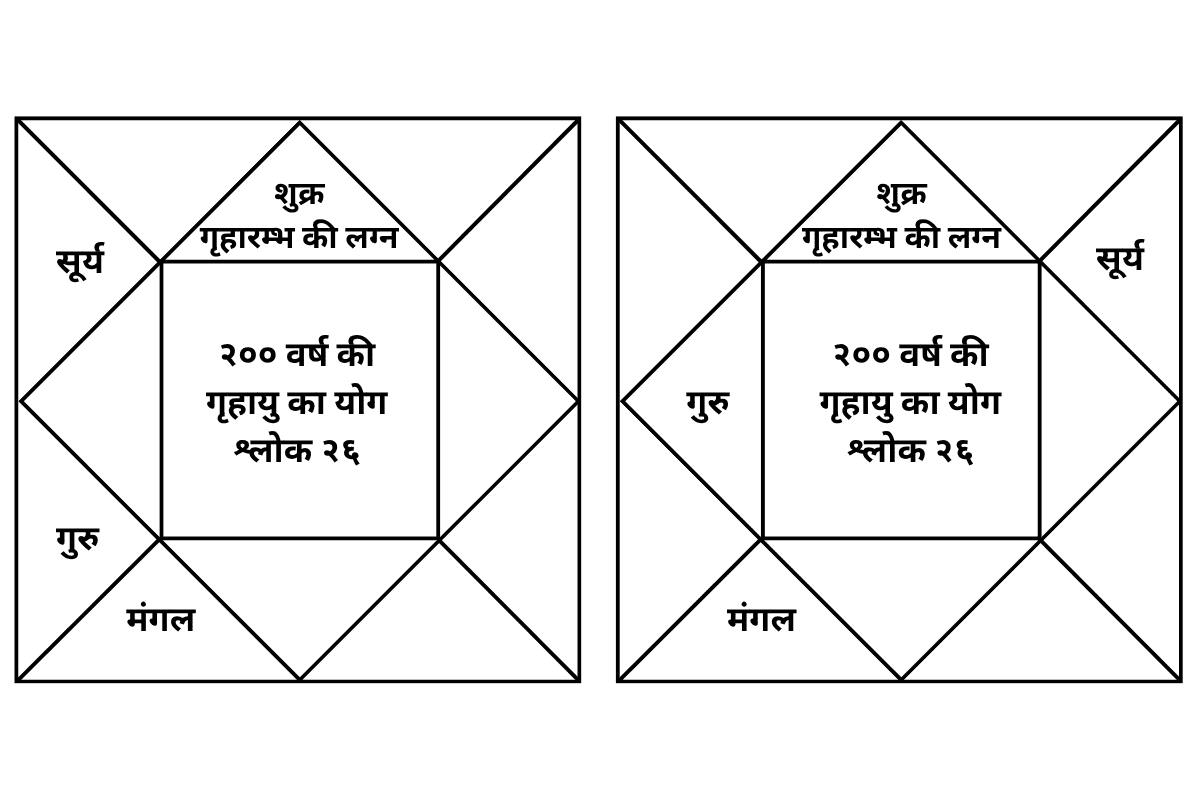
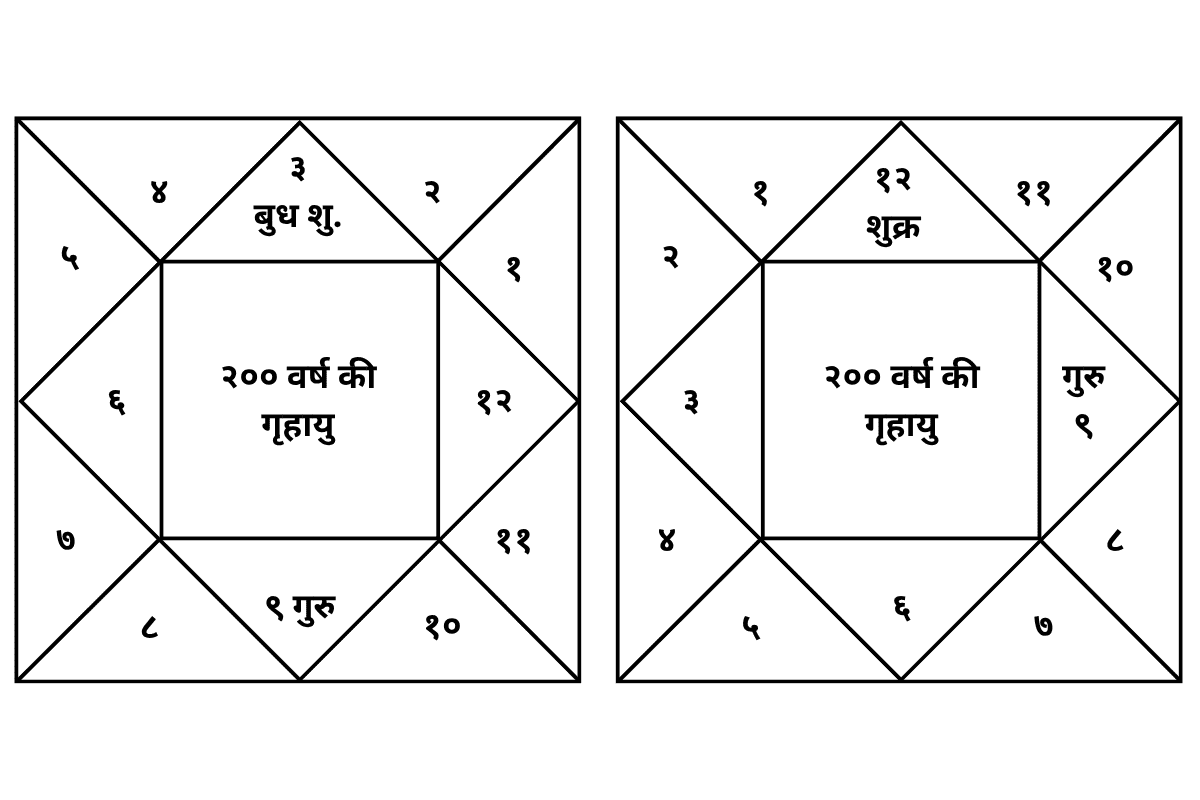
If at the time of foundation, Venus is in lagna, Jupiter in 5th, Mars in 6th, Sun in 3rd, Moon in any benefic house, then the house lasts for 200 years.
If at the time of foundation, Jupiter and Venus are placed in the Lagna, Mangal (Mars) in the sixth house, and Sūrya (Sun) in the eleventh house, then the house constructed under this combination will remain durable for 200 years.
Again, if at the time of foundation, benefic planets occupy their own sign or exalted sign in Lagna or in a kendra, the house constructed under this combination will remain durable for 200 years.

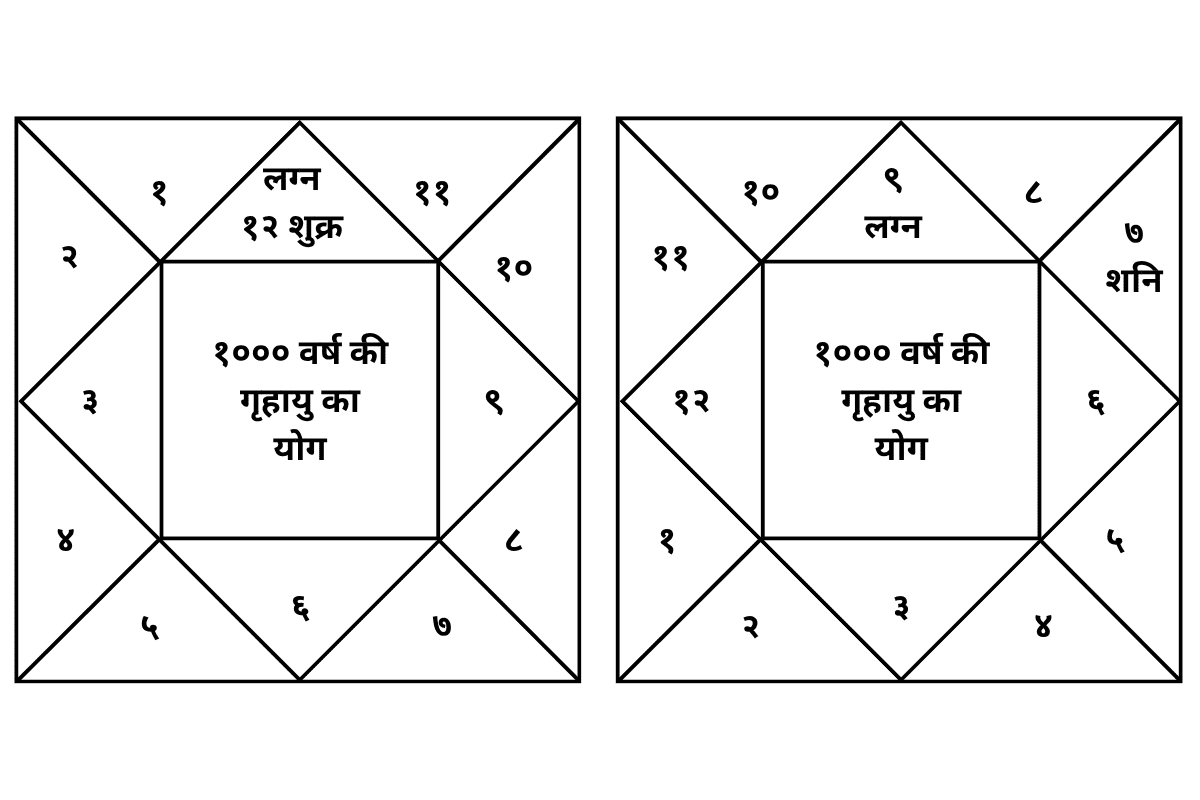
Houses Lasting for 1000 Years
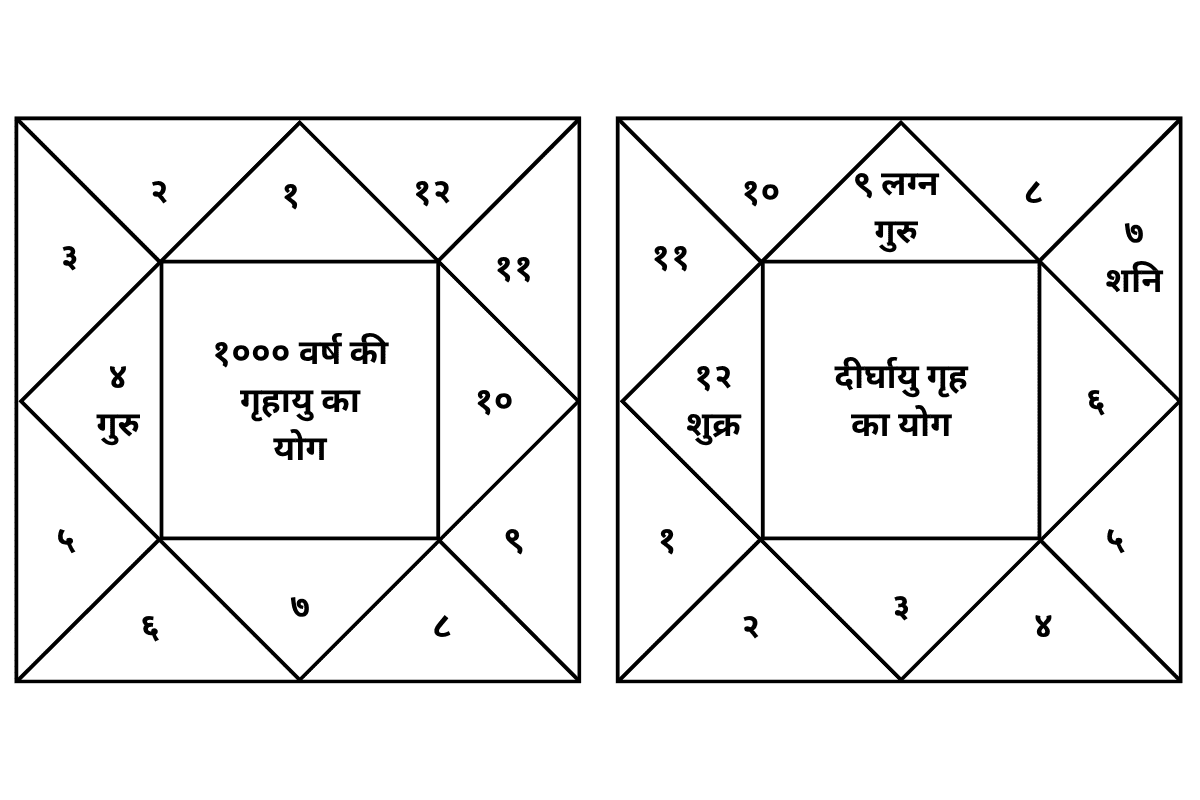
- If Venus is in lagna or kendra, Jupiter in lagna or kendra, and Saturn in 11th, with benefic planets well-placed, the house can last for one thousand years.
If at the time of foundation, Venus is placed in the Lagna in its own or exalted sign, or Jupiter is in the fourth house in its own or exalted sign, and Saturn is in the eleventh house in its own or exalted sign, then the constructed house will have a longevity of more than 1000 years.
Auspicious Combinations for Wealth and Prosperity
If Moon is in Cancer Lagna and Jupiter is in a kendra, along with other friendly planets in favorable positions, then the constructed house will be endowed with Lakshmi (wealth) for a long time.
-
Pushya, Uttara Phalguni, Uttara Ashadha, Uttara Bhadrapada, Shlesha, Mrigashira, Rohini, Purvashada, Shatabhisha – houses built under these nakshatras are wealthy and auspicious
. -
Vishakha, Chitra, Shatabhisha, Adra, Punarvasu, Dhanishtha, or on Friday – houses grant abundance of wealth and grains.
-
Hasta, Uttara Phalguni, Chitra, Ashwini, Anuradha, or on Wednesday – houses confer wealth, children, and overall happiness.
Combinations That Destroy Wealth
If at the time of foundation, a debilitated or defeated planet is positioned in the sixth house from the Lagna (ascendant), then the wealth (Lakṣmī) of the house being constructed is destroyed.
Combinations Causing the House to Pass into Another’s Hands
If even one malefic is in the 7th or 10th house and the owner’s ruling planet is weak, the house may pass to another person after construction.
Houses Lasting for 80 Years
If Lagna is between malefics, without benefic aspects, or Saturn is in the 8th house, the house may be destroyed in 80 years.
When a natural malefic planet is in the twelfth house and a retrograde malefic planet is in the second house, then the Lagna (ascendant) is considered to be in the 'Pāpa-Madhya' (zone of affliction).

Houses Lasting for 100 Years
When Saturn is in the Lagna (ascendant) and Mars is in the seventh house, and there is no aspect from benefic planets on them, then the house lasts for 100 years.
Combinations for Rapid Destruction of the House
If Moon is weak in Lagna and Mars is in the 8th house, the house may quickly be destroyed.
Additional Vāstu Considerations for House Construction
Inauspicious Conditions for Construction
If, at the time of construction, the ruling planets in the owner's horoscope are weak or afflicted, or if the Sun is debilitated or poorly placed, house construction should be avoided. Building in such conditions can bring danger to the occupants and destroy prosperity.
Fire-Related Hazards During Construction
- Construction initiated on Māgha, Mūla, Pūṣya, Pūrvaphalguni, Hasta, or Revati nakshatras and on a Tuesday can result in fire accidents, sometimes destroying the house completely.
- Similar fire risks occur if the Sun and Moon are both in Kṛttikā when starting construction.
Fire Hazard and Child Loss Yoga (Agni-Dah and Putra-Dah Yoga)
If house construction is started on a Tuesday under any of the following nakshatras: Mūla, Revati, Kṛttikā, Pūrvāṣāḍhā, Pūrvaphalguni, Hasta, or Maghā, there is a strong risk of fire in the house, which may also lead to the loss of children born in that house. This combination is considered highly inauspicious and must be avoided when planning construction.
Kṛpaṇa Yoga (Affliction of Children and Wealth)
If the house is begun under Jyeṣṭhā, Anurādhā, Bharaṇī, Svāti, Pūrvaphalguni, Pūrvāṣāḍhā, Dhanishṭhā, and on a Saturday, the house may suffer from lack of wealth, and children born may face disturbances or health issues due to negative energies.
- This effect applies not only to houses but also to temples, wells, tanks, and ponds. Proper selection of auspicious timing is essential to avoid these adverse influences.
Lagna Effects on House Construction
The ascendant or Lagna at the time of construction also plays a crucial role in determining the house's fortune. Starting construction in Capricorn, Scorpio, or Cancer Lagnas can bring harm to the house owner, while Aries, Libra, or Sagittarius Lagnas may cause delays in completing the house.
On the other hand, construction under Virgo, Pisces, or Gemini Lagnas is considered favorable for wealth accumulation, and starting a house in Aquarius, Leo, or Taurus Lagnas is highly auspicious, ensuring the construction is successful and prosperous. Proper attention to these timings and Lagna positions is essential for avoiding negative influences and ensuring a harmonious and thriving household.
Timing and Lagna Considerations
- Avoid construction during midday, midnight, and the twilight periods (dawn and dusk).
- Even in the Abhijit Muhūrta, avoid starting at exactly midday; leave a 10-minute before and after.
Planetary Effects by Lagna
The position of planets in the Lagna (ascendant) at the time of house construction greatly influences the fortune and well-being of the occupants. If the Sun is in Lagna, there is a risk of lightning or sudden incidents. A Moon in Lagna can result in the loss of stored wealth, while Mars may pose potential danger to life. Saturn in Lagna may bring poverty or financial difficulties.
In contrast, Jupiter in Lagna ensures the fulfillment of dharma, prosperity, and the attainment of desires. Venus blesses the household with children, and Mercury enhances skill, intelligence, and overall capability.
Effects of Planets in the 2nd House
The second house governs wealth, family resources, accumulated possessions, speech, and communication. If the Sun is placed in the second house, it can lead to the potential loss of property, money, or other family resources. When the Moon is in this house, the influence of enemies is diminished, providing some protection from external threats.
Mars in the second house may create obligations, debts, or bondage, while Saturn may bring ongoing obstacles, delays, and restrictions in accumulating wealth. Mercury in the second house provides gains in wealth, property, and financial intelligence. Jupiter promotes dharma, righteousness, and spiritual growth, encouraging ethical accumulation of wealth and moral prosperity.
Venus in the second house ensures the continuous presence of joy, comfort, and material prosperity in the household. Each planet’s placement in this house must be carefully considered when starting construction to ensure financial stability and family happiness.
Effects of Planets in the 3rd House
The third house governs courage, initiative, siblings, short journeys, and personal efforts. If malefic planets occupy the third house, the progress of the household or construction may be delayed, and achievements may come slowly.
In contrast, if benefic planets such as the Full Moon, rising Mercury, Jupiter, or Venus are present in the third house, the house and its affairs experience rapid progress, and desired goals are achieved promptly. The influence of this house is therefore crucial in determining how quickly the household flourishes and how smoothly efforts are rewarded.
Effects of Planets in the 4th House
The fourth house governs home comfort, property, real estate, emotional stability, maternal influences, and happiness within the household. When Jupiter occupies the fourth house, the family gains respect from authorities and influential persons, creating a sense of social security. Mercury in the fourth house ensures gains in wealth, intelligence, and property-related matters. Venus contributes to material gains, especially in land, buildings, and luxurious comforts.
However, if the Sun is positioned here, separation from friends or disruptions in social life may occur. Mars in the fourth house can expose secrets or create conflicts within the household, while the Moon may affect mental clarity, emotional balance, or intelligence. Saturn in this house may result in an overall decline in comfort, stability, and well-being, leading to long-term challenges in household management.
Effects of Planets in the 5th House
The fifth house represents progeny, children, creativity, education, intelligence, and accumulated wealth or treasures. When Jupiter is in the fifth house, it brings the arrival of friends, increase in property, and overall wealth accumulation. Venus in this house blesses the family with happiness through children and ensures harmony in domestic life. Mercury here supports gains in intellectual pursuits, arts, education, and material prosperity. If the Sun occupies the fifth house, it may cause sorrow related to children or difficulties in their upbringing.
The Moon in the fifth house can lead to conflicts within the family or emotional disturbances. Mars may create obstacles in work or personal projects, while Saturn in this house may cause tension, disputes, or disharmony among relatives and friends. The careful assessment of these planetary positions at the time of house construction ensures that the household flourishes with happiness, prosperity, and stability.
Effects of Planets in the 6th House
The sixth house in the house-construction chart relates to health, service, debts, conflicts, and enemies. The planetary positions here strongly influence the well-being of the household and its members. If the Sun occupies the sixth house, It helps remove diseases and supports recovery from illnesses. The Moon in this house ensures nourishment, growth, and the steady progress of the family and the home.
When Mars is positioned here, the household gains material comforts and facilities, enhancing the lifestyle of the occupants. Saturn in the sixth house weakens enemies and reduces their harmful influence, thereby protecting the owner of the house. If Jupiter occupies this position, success comes when the owner works under the guidance and advice of good counselors or mentors.
A Venus placement in the sixth house indicates access to knowledge and education, while Mercury here brings proficiency in skills, arts, and technical knowledge. Overall, the sixth house planets shape the health, education, and practical strength of the household.
Effects of Planets in the 7th House
The seventh house represents relationships, partnerships, vehicles, and public reputation. If Jupiter is placed in the seventh house, it brings benefits from heavy vehicles such as elephant. When Mercury is here, it provides benefits from horses, which symbolically indicates smaller or faster-moving vehicles. If Venus occupies this house, the result is acquisition of land and real estate.
However, some placements bring challenges: if the Sun is in the seventh house, the house owner may lose reputation and social respect. If Mars is placed here, misfortunes and troubles may arise. The Moon in the seventh house can create distress and difficulties, while Saturn may cause physical disability or afflictions for members of the household. The seventh house is therefore a crucial point for balancing prosperity, vehicles, land, and reputation with potential risks.
Effects of Planets in the 8th House
The eighth house is often associated with longevity, hidden matters, obstacles, and challenges. If the Sun occupies this house, the owner may suffer difficulties caused by enemies. The Moon in the eighth house brings losses and instability, while Mars here gives rise to fears of disease. Similarly, Saturn in this house also creates health-related troubles.
On the positive side, if Mercury is placed here, both wealth and respect are gained. Venus in the eighth house can create disputes or disharmony within the family of the house owner. However, Jupiter placed here brings victory, success, and favorable results even in difficult circumstances. The eighth house, therefore, has a mixed influence, often showing hidden challenges but also the potential for triumph when benefic planets are present.
Effects of Planets in the 9th House
The ninth house governs fortune, dharma (righteousness), higher education, and blessings from elders. When Jupiter (also known as Vāgīśa, lord of speech and wisdom) is in the ninth house, the household enjoys learning, hospitality, and the blessings of education and honor. If Mercury is here, the owner experiences a variety of pleasures and comforts. When Venus occupies the ninth house, it brings victory, success, and prosperity.
However, certain placements can bring difficulties: if the Moon is here, weakness in health and deficiency in bodily strength may occur. If Mars is in the ninth house, financial losses are possible, while the Sun here causes decline in dharma or religious merit. Saturn in the ninth house creates criticism and obstacles related to religious or moral matters.
In some manuscripts, the word “Kṣīva” (referring to Venus) appears in place of “Jīva” (referring to Jupiter). The correct word is Kṣīva, which originates from the Sanskrit root meaning intoxication or being in a drunken state. Venus, also known as Śukrācārya, was associated with such qualities due to mythological stories in which he consumed alcohol and was once tricked into swallowing Kacha, the son of Jupiter, in an intoxicated state. Later, Kacha emerged alive when Venus called out his name. This story explains why Venus was sometimes called “Kṣīva.” Hence, in verse 64, the correct reading should be Kṣīva (Venus) rather than Jīva (Jupiter).
In some manuscripts, the word uses the Kṣīva for Venus. In some versions of the manuscripts, however, the word appears as Jīva, which would normally mean Jupiter. This reading is not correct in this context. The proper word is Kṣīva, which is another name for Venus.
The word Kṣīva comes from the root “kṣīv” which carries meanings such as being intoxicated, becoming overwhelmed, or being in a drunken state. This term is connected with the legendary story of Śukrācārya (the teacher of the Asuras). It is said that he consumed liquor, and once, when the demons killed and ground Kacha (the son of Jupiter, Bṛhaspati) into powder and mixed it with wine, Śukrācārya unknowingly drank it. Later, when Kacha was called by name, he emerged alive from the stomach of Śukrācārya because he had mastered the science of resurrection (Mṛtasañjīvanī Vidyā).
Since that event, Śukrācārya acquired the name Kṣīva. The word also carries the sense of spitting out or vomiting, which fits the tale of Kacha emerging from him. Therefore, in this śloka, the reading Kṣīva (for Venus) is accurate and meaningful, whereas Jīva (for Jupiter) would be incorrect. This careful distinction helps us interpret the planetary results properly in Vastu and astrology.
Effects of Planets in the 10th House
The tenth house represents profession, authority, fame, and overall achievements. When Venus is in the tenth house, the household enjoys comfort, including abundance of furniture, bedding, and luxurious arrangements. If Jupiter is here, it brings great happiness and overall prosperity. Mercury in this house gives victory, acquisition of wealth, and benefits from women. If the Sun occupies the tenth house, the house owner gains friends and relatives, leading to an increase in social connections.
However, the Moon in this position can increase grief and sorrow within the household. If Mars is in the tenth house, it brings acquisition of gems and valuable items. On the other hand, Saturn here can destroy reputation and honor, causing loss of social standing.
Effects of Planets in the 11th and 12th Houses
The eleventh house is the house of gains, profits, and fulfillment of desires. Whatever planet is placed in the eleventh house grants the household benefits related to its natural significations.
The twelfth house is the house of expenditure, losses, and spiritual detachment. Any planet placed in the twelfth house causes expenses and losses connected with its significations.
Influence of Planetary Dignities
The results of planets in a house are not determined only by their placement but also by their dignity, that is, the condition of the sign they occupy.
When a planet is in its exaltation sign, it produces the complete effect of its inherent nature, whether that nature is auspicious or inauspicious. In its own sign, the planet delivers about three-quarters of its full potential. If the planet occupies its Mūlatrikona sign, it is somewhat less powerful and gives half of its results.
When a planet resides in a friendly sign, it still contributes positively but with reduced strength, granting about one-quarter of its full effect. If the planet is placed in a neutral sign, it gives only average results without any special strength.
Placement in an enemy’s sign, however, weakens the planet and can bring difficulties, obstacles, or suffering. When the planet falls in its debilitation sign, it becomes almost powerless and its capacity to deliver results is greatly reduced. On the other hand, if a planet is Vargottama — it becomes highly empowered and produces excellent results.
गृहारम्भ कुण्डली में लग्नादि द्वादश भावों में स्थित ग्रहों के संक्षिप्त फल की तालिका
| भाव क्रमांक | सूर्य | चन्द्र | मंगल | बुध | गुरु | शुक्र | शनि |
|---|---|---|---|---|---|---|---|
| १ | वज्रपात | कोशहानि | मृत्यु | कुशलता | धर्मार्थकाम | पुत्रप्राप्ति | दरिद्रता |
| २ | हानि | शत्रुनाश | बन्धन | धनसम्पत्ति | धर्मवृद्धि | आनन्द | विघ्न |
| ३ | सिद्धि | सिद्धि | सिद्धि | सिद्धि | सिद्धि | सिद्धि | सिद्धि |
| ४ | मित्रवियोग | बुद्धिनाश | मन्त्रभेद | धनलाभ | राजा से लाभ | भूमिलाभ | सर्वनाश |
| ५ | पुत्रदुःख | कलह | कार्यविरोध | रत्नलाभ | धनलाभ | पुत्रसुख | बन्धुकलह |
| ६ | रोगनाश | पुष्टि | प्राप्ति | कुशलता | मन्त्रोदय | विद्यालाभ | शत्रुनाश |
| ७ | कीर्तिनाश | क्लेश | विपद | अश्वलाभ | गजलाभ | भूमिलाभ | भय |
| ८ | द्वेष | पदहानि | रोगभय | धनप्राप्ति | विजय | स्वजनभेद | रोगभय |
| ९ | धर्महानि | धातुक्षय | धनक्षय | रोग | विद्यालाभ | विजय | धर्मदूषण |
| १० | मित्रवृद्धि | शोक | रत्नलाभ | विजय-धन | सौख्य | शयनासन का लाभ | कीर्तिनाश |
| ११ | लाभ | लाभ | लाभ | लाभ | लाभ | लाभ | लाभ |
| १२ | व्यय | व्यय | व्यय | व्यय | व्यय | व्यय | व्यय |
House construction, according to Vāstu Śāstra, is not a random process of placing bricks and walls. It is a sacred act that requires harmony between the physical layout of the house and the cosmic forces represented by planets, nakshatras, and auspicious timings.
The placement of planets in different houses, the choice of Lagna, and the planetary dignities all combine to determine the prosperity, stability, and longevity of a home. A well-constructed house following these principles can bring health, wealth, harmony, and blessings to generations, while ignoring them may invite challenges or even destruction of the property.
By aligning construction with these timeless rules, one ensures not just a dwelling, but a living space filled with positive energy and divine grace.