
Rahu's Position and Foundation Digging in Vastu Shastra
When building a house, Vastu Shastra teaches us that the timing and direction of foundation digging are crucial for the future prosperity of the home.
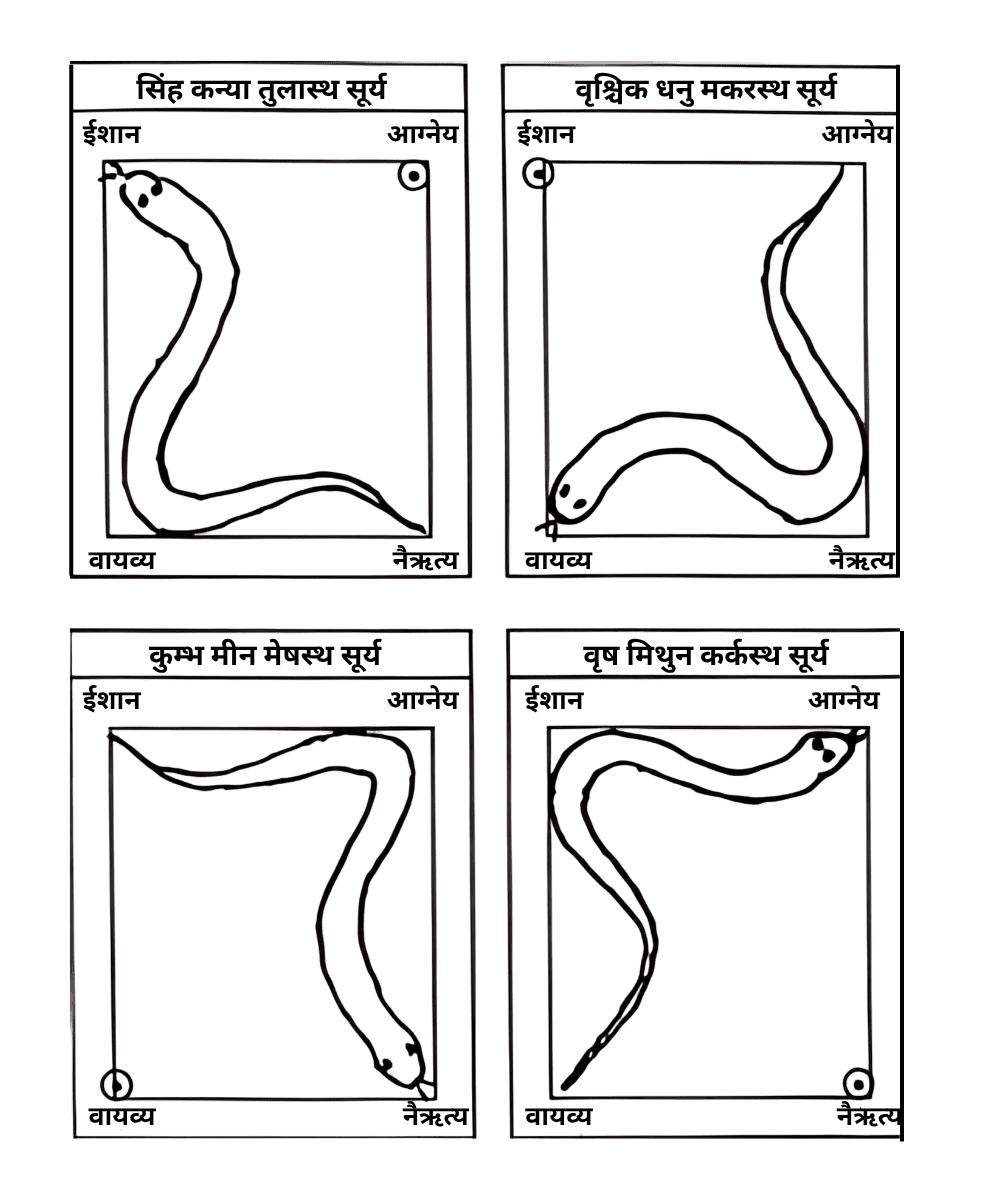
According to ancient wisdom, a cosmic being called Vastupurusha lies across every piece of land in the form of Rahu, a serpent-like figure. His position changes with the movement of the sun through different zodiac signs, and knowing where his head, back, belly, and tail are located is essential before starting any construction work.
This knowledge helps ensure that your new home brings happiness, wealth, and harmony to your family.
Rahu's Face and Solar Months
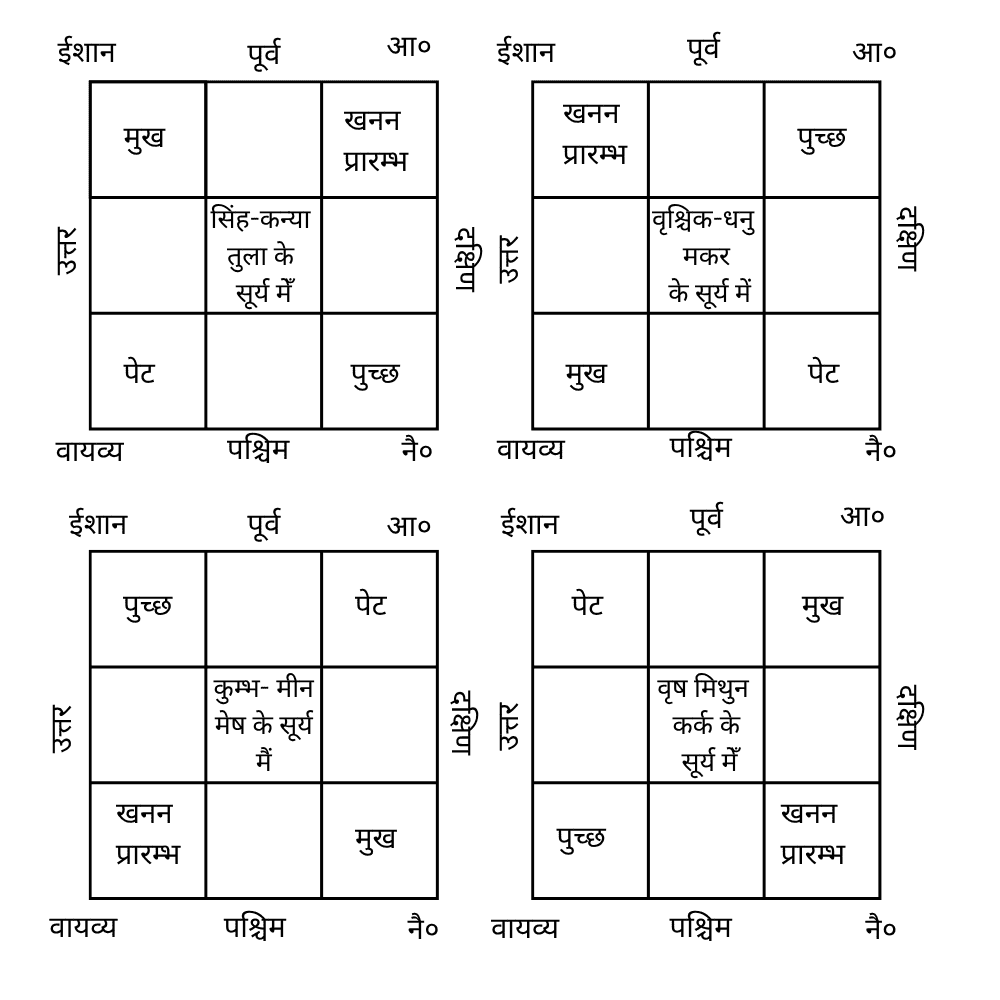
In Vastu Shastra, the beginning of foundation digging is connected to the position of Vāstupuruṣa, represented in the form of Rahu lying like a serpent across the land. His head, back, belly, and tail change position according to the movement of the Sun through the zodiac signs. This knowledge is crucial for auspicious excavation and construction timing.
Every three solar months, Rahu shifts his face to a new direction, beginning with the eastern side.
When a house is constructed, its entrance or the first act of digging should be aligned with the direction of Rahu’s face.
If the door or excavation faces a direction opposite to Rahu’s head, it brings grief, fear, and misfortune to the occupants. Thus, knowledge of Rahu’s position in relation to solar months is essential before starting construction.
Determining Rahu’s Position
The calculation of Rahu’s position differs according to the type of structure:
- For houses, Rahu’s head is determined by counting three solar signs from Leo (Siṃha).
- For altars and sacrificial platforms, the count begins from Taurus (Vṛṣabha).
- For templesThe calculation starts from Pisces (Mīna).
- For ponds or water bodiesThe reference point is Capricorn (Makara).
Through these methods, one determines where Rahu’s head lies, followed by his back and tail in the corresponding directions.
Rahu’s Serpent-Like Form
Rahu is envisioned as a serpent stretched across the plot, lying with his head, back, belly, and tail distributed over the land. Every three solar months, his body shifts direction.
For instance, when the Sun passes through Leo, Virgo, and Libra, Rahu’s head lies in the north-east (Īśāna), his back in the north-west (Vāyavya), and his tail in the south-west (Nairṛtya).
This serpent-like image warns that the digging of a foundation must not begin at his head, back, or tail, for striking these points brings inauspicious results.
Where to Begin Digging
The foundation should always begin at Rahu’s belly or empty side (kukṣi), which is considered safe and auspicious.
Excavating here ensures prosperity and harmony in the household. Digging at the head results in destruction, at the back leads to the loss of parents, and at the tail causes harm to wife and children.
Thus, Vastu directs us to begin the work only from the unoccupied angle (vidiśa or corner) that is not burdened by Rahu’s head, back, or tail.
Importance of Correct Direction
The scriptures emphasize that foundation digging should not begin from the main cardinal directions (east, south, west, north).
Instead, it should start from the intermediate corners (northeast, southeast, southwest, northwest), but only from a safe angle that avoids Rahu’s vital parts.
If this precaution is ignored, misfortune and obstruction are said to follow the householder. Conversely, when Rahu’s placement is respected, the land is purified, and the beginning of construction becomes auspicious.
Exception for Multi-Hall Houses
An exception is given for larger structures like chatushshala (four-hall houses) or trishala (three-hall houses). In such cases, the exact rule of Rahu’s head and tail does not strictly apply, since the size and layout allow for multiple auspicious directions.
Significance of Rahu in Vastu
The teachings remind us that Rahu, like a cosmic serpent, lies upon every plot of land. His body shifts with the Sun’s movement, and unless we respect his position, the act of digging is seen as an injury to him.
Striking Rahu’s head or body brings harm to the owner, while beginning at the safe zone ensures blessings.
Therefore, before construction, the land should be studied carefully, and the digging should begin only in harmony with Rahu's positioning. In this way, Vastu transforms the act of foundation digging into a sacred ritual aligned with cosmic order.
For comprehensive guidance on vastu rituals for auspicious beginnings and sacred land testing practices, explore our detailed construction guides.