
Signs of Auspicious and Inauspicious Land in Vāstushāstra
When choosing land for building a home or settlement, Vāstushāstra gives great importance to the natural qualities of the site. The Viśvakarmaprakāśa explains that the earth itself has character, and depending on its colour, fragrance, fertility, and shape, it can either bring prosperity or cause hardship.
This detailed analysis complements our guide on choosing the right land and traditional land testing methods.
Land that is bright in appearance, carries a pleasant fragrance, and has a wholesome taste is said to support wealth, fertility, and happiness. Such soil is considered alive and nourishing.
On the other hand, if the land looks dull, smells foul, or has no taste, it is believed to bring scarcity, poor harvests, and sorrow for those who dwell there.
Auspicious Shapes of Land
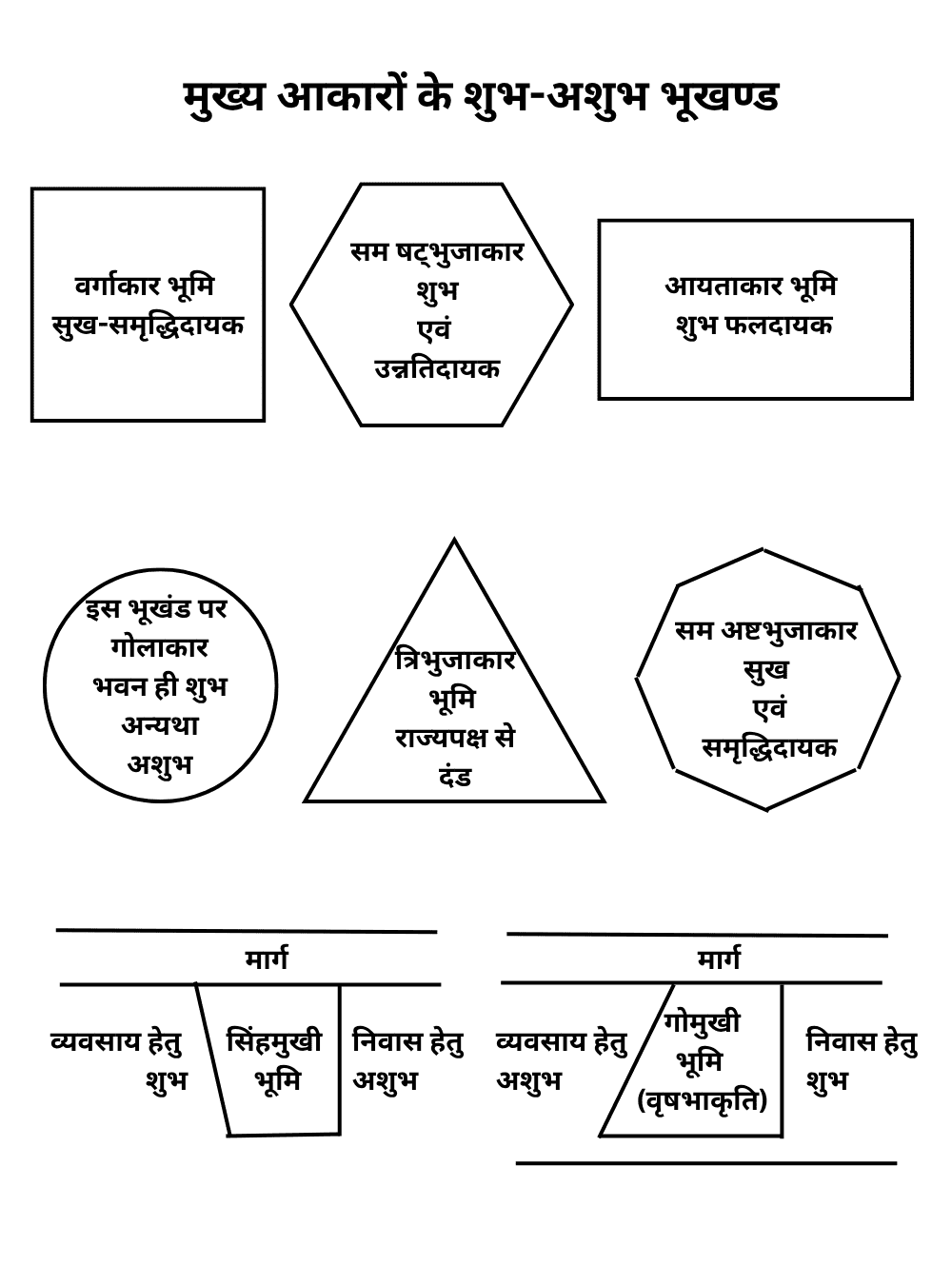
The tradition associates certain shapes of land with good fortune. A square-shaped plot is believed to bring abundance and prosperity. Elephant-shaped land is linked with material wealth, while lion-shaped tracts are said to bless families with virtuous sons.
Land that resembles a bull ensures the presence of cattle and vehicles, and circular plots, if matched with round houses, provide stable livelihoods.
Trident-shaped land is considered powerful, promising courage and success, while a linga-shaped site is auspicious for ascetics and devotees of Śiva. Palace-shaped or banner-like plots enhance social prestige, and pot-shaped land is believed to bring growing riches.
Good Land for Living and Work
Vāstushāstra gives detailed warnings about land that carries inauspicious results if used for building. Certain shapes of plots are believed to bring difficulties, loss, or misfortune to the residents.
Triangular plots are considered harmful, leading to the loss of children, while cart-shaped land reduces happiness. Land shaped like a winnowing basket, a hand-fan, or a large drum is seen as unfavorable, bringing financial loss, destruction of dharma, and decline of the family’s wellbeing.
Snake-shaped or frog-shaped land is feared, as it is believed to create constant fear and instability. Donkey-shaped land causes poverty, and land resembling a python is said to bring the danger of death.
Similarly, land that appears flat in the middle but raised at both ends, or hammer-shaped land, reduces masculine strength and vitality. If the land resembles a crow or an owl, it is thought to bring grief, sorrow, and fear.
Plots shaped like a snake again are specifically mentioned as harmful to children and grandchildren, while bamboo-like land with knotty joints is believed to destroy family lineage. Land resembling a pig, camel, goat, bow, or axe is considered highly inauspicious, as it produces ignorant and dirty offspring, even sons who dishonor their teachers.
Even more dangerous are plots shaped like a lizard (kṛkalāsa) or a corpse. Such land is said to bring the death of children and constant financial suffering. Likewise, land that has been the dwelling of sinners or feels difficult and harsh should be completely avoided, as it carries the misfortune of the past.
Qualities of Excellent Land
Beyond shape, the quality of the soil itself matters. Land that appears pleasant brings healthy offspring, and firm, solid soil ensures wealth. A plot that naturally slopes towards the northeast (the Īśāna direction) is considered especially auspicious, granting both prosperity and sons to the family.
Sound and Elevation of Land
If the land produces a deep sound when struck, it is thought to give rise to children with strong voices. Elevated ground fosters ambition and progress, while level land brings comfort and happiness.
Rough and Uneven Land
Uneven, rugged, or broken land is rarely suitable for ordinary homes. Ancient texts say such land should only be used for fortresses, dwellings of lower castes, or for robbers, as it does not support peace and prosperity for householders.
Land by Natural colour
The natural colour of the land also has significance. White land is said to benefit everyone, while other colours were linked with the four varṇas: white for Brāhmaṇas, red for Kṣatriyas, yellow for Vaiśyas, and black for Śūdras.
Land with Specific Plants
Land covered with sacred grasses like kuśa or kāśa is thought to bless children with spiritual brilliance, while land with abundant dūrvā grass supports bravery and vitality. Fertile, fruit-bearing land is naturally preferred, as it ensures both wealth and healthy progeny.
Inauspicious Locations and Conditions
Some locations, no matter how fertile, are considered dangerous. Land near riverbanks that suffer erosion can lead to short-lived or foolish children.
Sites with large stones at the center, deep pits, or cracked and perforated ground bring poverty, dishonesty, and disease. Plots near anthills, shrines, jackal dens, or the dwellings of bears are seen as life-threatening for children and animals.
Building at crossroads, near temples, or close to government officials and ministers is discouraged, as it invites anxiety, loss of wealth, or bad reputation.
Additional Forbidden Lands
Some lands are considered highly inauspicious in Vāstuśāstra because of their shapes, surroundings, or natural conditions. Living or building on such plots may bring difficulties, family problems, or financial losses.
Land shaped like a winnowing basket (śūrpa), a cat, or a stick is said to cause suffering to children. Similarly, land resembling a pestle (musala) leads to children who are rough and unrefined, and such land is believed to bring destruction to the family lineage.
Plots that appear frightening or gloomy create constant fear and distress. Places exposed to harsh winds bring health issues related to vāyu (air element). Land where wild animals such as bears or boars are commonly found is considered dangerous, as it may bring loss of cattle or livestock.
Uneven and rugged land, called vikata, is linked to producing children with harsh or unpleasant qualities. Land that is excessively dry and coarse may cause children to speak rudely or bring discord within the family.
Certain locations also bring specific troubles. Building near a chaitya (raised platform or shrine) creates fear for the householder. Land near an anthill is seen as unlucky and a source of constant problems. Living near the den of jackals or wild animals is said to cause the untimely death of children.
Constructing a house at a crossroads (chatuṣpatha) results in bad reputation and dishonor. Land too close to a temple may bring mental distress instead of peace. Building next to the residence of a government officer or minister can lead to financial losses. If a house is built in a pit or sunken land, severe misfortunes may follow.
Plots with many pits or depressions also cause water scarcity and difficulties in daily life. Finally, land shaped like a tortoise is considered harmful for wealth, as it slowly drains away financial resources.